Unit 83 · Determiners and pronouns
a lot much many
Study
We use much + uncountable noun (much food / much money etc.):
Did you buy much food?
We don't have much luggage.
How much money do you want?
A: Do you have any money? B: I have some, but not much.
We use many + plural noun (many books / many people etc.):
Did you buy many books?
We don't know many people.
How many photos did you take?
A: Did you take any photos? B: I took some, but not many.
We use a lot of + both types of noun:
We bought a lot of food.
Paula doesn't have a lot of free time.
We bought a lot of books.
Did they ask a lot of questions?
We say:
There is a lot of food/money/water ... (singular verb)
There are a lot of trees/shops/people ... (plural verb)
A lot of people speak English. (not speaks)
We use much in questions and negative sentences:
Do you drink much coffee?
I don't drink much coffee.
But we do not often use much in positive sentences:
I drink a lot of coffee. (not I drink much coffee)
'Do you drink much coffee?' 'Yes, a lot.' (not Yes, much)
We use many and a lot of in all types of sentences (positive/negative/question):
We have many friends / a lot of friends.
We don't have many friends / a lot of friends.
Do you have many friends / a lot of friends?
You can use much and a lot without a noun:
Amy spoke to me, but she didn't say much.
'Do you watch TV much?' 'No, not much.' (= not often)
We like films, so we go to the cinema a lot. (not go to the cinema much)
I don't like him very much.
Exercises (5)
Write much or many.
- 1Did you buy food?example
- 2There aren't hotels in this town.
- 3We don't have petrol. We need to stop and get some.
- 4Were there people on the train?
- 5Did students fail the exam?
- 6Paula doesn't have money.
- 7I wasn't hungry, so I didn't eat .
- 8I don't know where Gary lives these days. I haven't seen him for years.
- 9Write How much or How many.people are coming to the party?
- 10milk do you want in your coffee?
- 11bread did you buy?
- 12players are there in a football team?
Complete the sentences. Use much or many with these words: books countries luggage people time times
- 1I don't read very much. I don't have many books. example
- 2Hurry up! We don't have .
- 3Do you travel a lot? Have you been to ?
- 4Tina hasn't lived here very long, so she doesn't know .
- 5'Do you have ?' 'No, only this bag.'
- 6I know Tokyo well. I've been there .
Complete the sentences. Use a lot of + these words: accidents books fun interesting things traffic
- 1I like reading. I have a lot of books. example
- 2We enjoyed our visit to the museum. We saw .
- 3This road is very dangerous. There are .
- 4We enjoyed our holiday. We had .
- 5It took me a long time to drive here. There was .
In some of these sentences much is not natural. Change the sentences or write OK.
- 1Do you drink much coffee? example
- 2I drink much tea.
- 3It was a cold winter. We had much snow.
- 4There wasn't much snow last winter.
- 5It costs much money to travel around the world.
- 6We had a cheap holiday. It didn't cost much.
- 7Do you know much about computers?
- 8'Do you have any luggage?' 'Yes, much.'
Write sentences about these people. Use much and a lot.
- 1
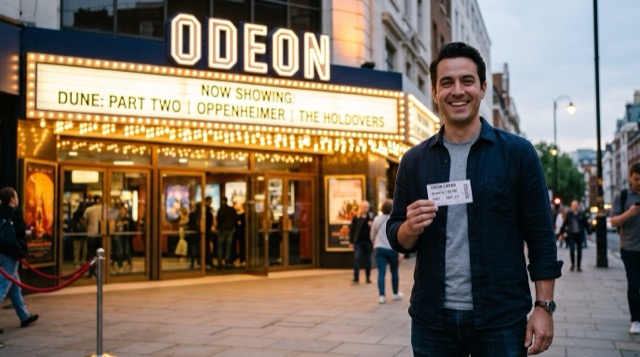 James loves films. (go to the cinema)He goes to the cinema a lot. example
 - 2
 Nicola thinks TV is boring. (watch TV)She doesn't watch TV much. example
 - 3
 Tina is a good tennis player. (play tennis)She .
 - 4
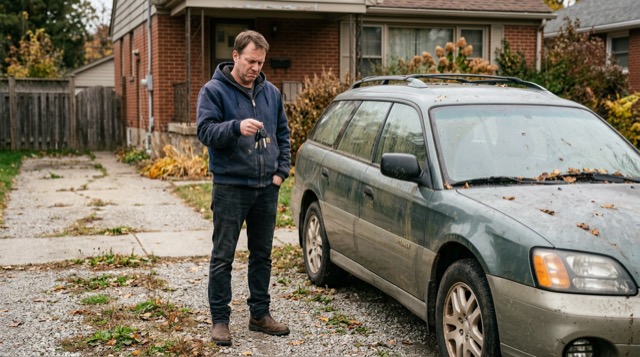 Mark doesn't like driving. (use his car)He .
 - 5
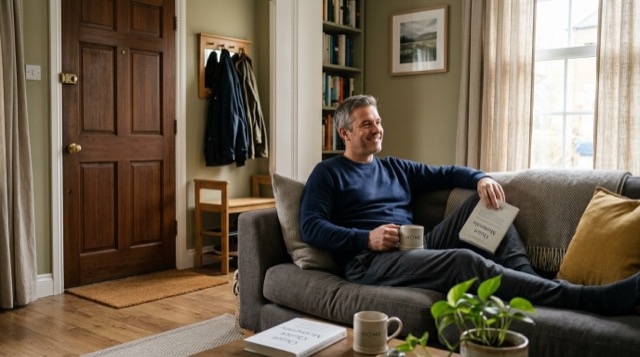 Paul spends most of the time at home. (go out)He .
 - 6
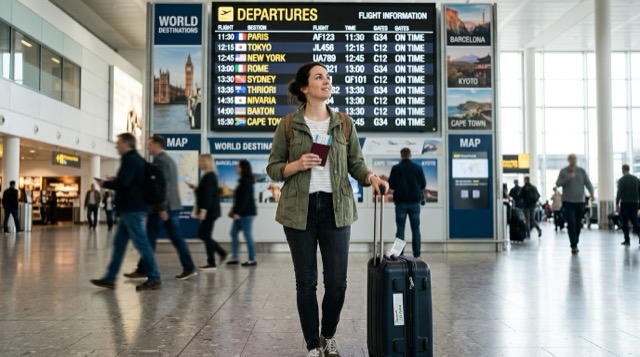 Sue has been all over the world. (travel)She .